Philately · India · Everyday postage
Standard & definitive stamps
Eleven long-running series carried ordinary mail while turning a tiny postal label into a changing portrait of Indian heritage, work, science, nature, and public life.
- Purpose
- Day-to-day postal rates
- Illustrated records
- 197 stamps & variants
- Issue coverage
- 1949–2020
- Series catalogued
- Eleven
The national story in miniature
Heritage: the first series assembled monuments and sacred art from many regions and traditions.
Development: planning, agriculture, industry, energy, health, and communication became recurring visual themes.
Postal change: denominations moved from annas to decimal paise and rupees as rates and currency changed.
Collecting detail: long use creates watermark, perforation, paper, colour, and reprint varieties within one design.
Catalogue numbering can vary where collectors divide special definitives or personality issues into sub-series. This guide follows India Post’s total of eleven series and names the commonly used collector groupings. The complete albums below retain separately catalogued design, watermark, colour, and inscription variants rather than showing only one example of each subject.
Complete illustrated checklist
Find a definitive stamp
Search all eleven albums by subject, issue date, denomination, or collector variant. Open any series below to see every stamp and its image.
Loading 197 catalogue records…
Archaeological & Historical Monuments
A many-sided inheritance
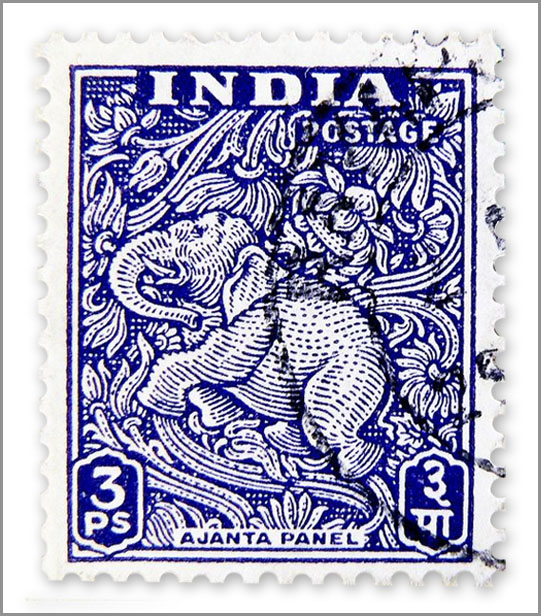
Issued on 15 August 1949, the first definitive series replaced inherited imperial imagery with sixteen Indian works of art and architecture. Its subjects ranged from the Ajanta panel, Konark horse, Nataraja, and Sanchi gateway to the Golden Temple, Red Fort, Taj Mahal, Qutub Minar, and Shatrunjaya temples.
- Range: 3 pies to ₹15
- Visual language: sculpture, temples, tombs, forts, and gateways
- Collector clue: several values were reissued in 1951
Five Year Plan
A country building at full scale
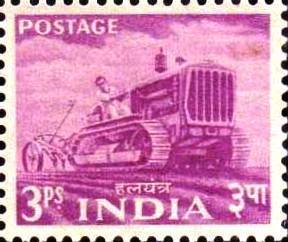
Released on Republic Day 1955, this series made development its subject. Agriculture and weaving sit beside dams, factories, locomotives, aviation, telephones, public health, and industrial landscapes—a compact visual programme for a newly planned economy.
- Range: 3 pies to ₹10
- Representative designs: tractor, power loom, Tilaiya Dam, malaria control, steel industry
- Design shift: from inherited monuments to contemporary work and infrastructure
Map of India
One motif for decimalisation
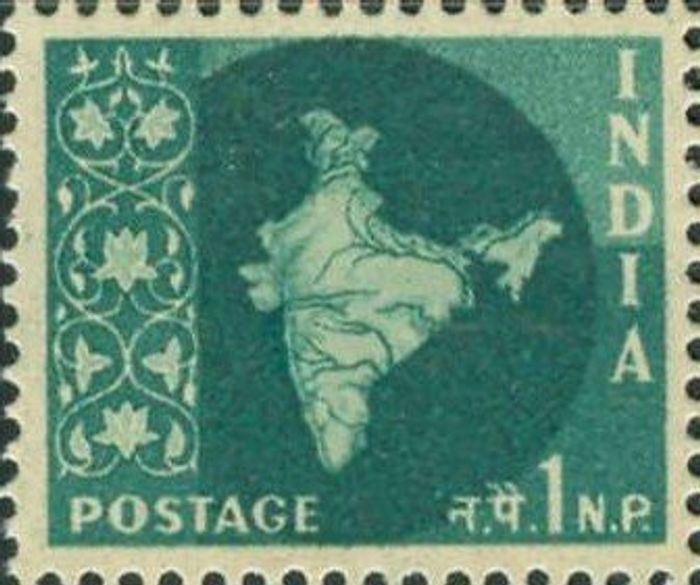
Introduced with decimal currency on 1 April 1957, this compact series used a consistent map motif across its values. Early printings used the star watermark; later issues moved to the Ashoka Pillar watermark and added denominations as postal needs changed.
- Currency: naye paise, later paise
- Primary variants: star and Ashoka Pillar watermarks
- Collector clue: similar-looking values reward close attention to colour and watermark
Agriculture, Tourism & Export Promotion
The productive and visitable nation
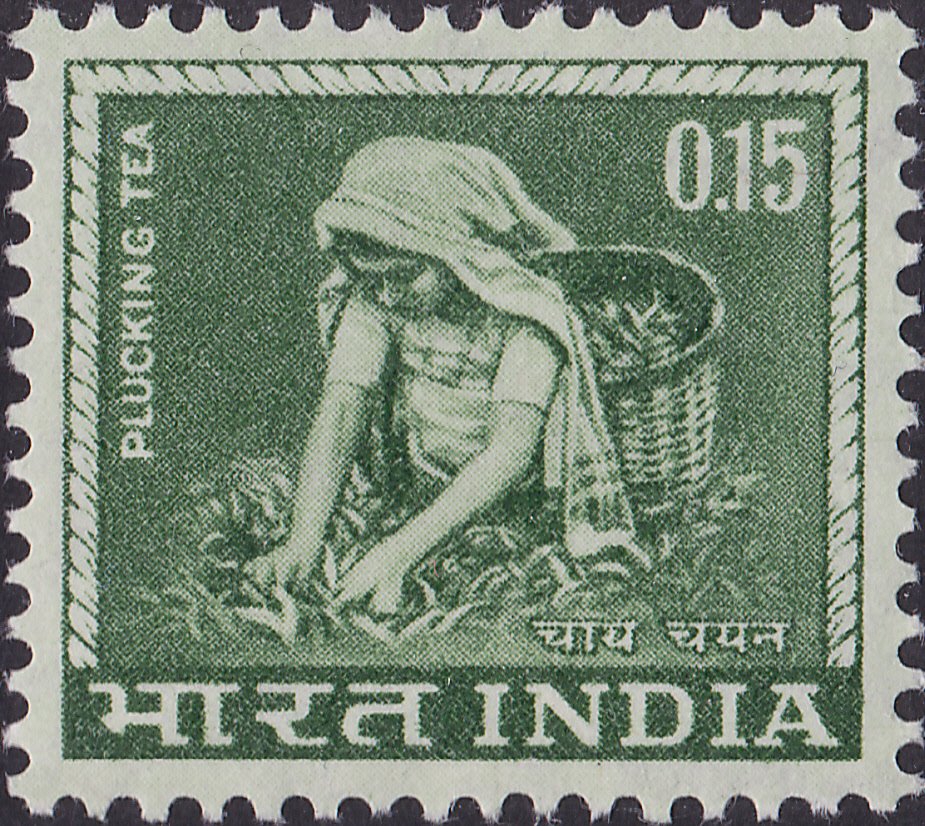
Beginning with tea plucking in 1965, the fourth series assembled farming, manufacturing, craft, wildlife, monuments, transport, and landscapes. The broad subject mix—from mangoes and bidriware to Dal Lake, Bhakra Dam, a Gnat aircraft, and the Trombay reactor—made the mail stream a national showcase.
- Representative subjects: tea, mangoes, handicrafts, dolls, Hampi, Somnath
- Technology: locomotive, jet aircraft, dam, and atomic reactor
- Production: photogravure with mostly single-colour paise values
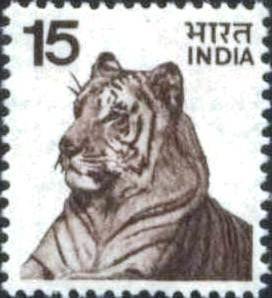
Modified Agriculture, Tourism & Export Promotion
Familiar themes, revised for new rates
The fifth series was a practical modification of the fourth. It refreshed values, inscriptions, and selected designs while retaining the mixture of wildlife, craft, family planning, transport, landscape, and infrastructure.
- Launch: 20 August 1974
- Representative designs: chital, tiger, veena, crane, Kashmir landscape
- Why it matters: it shows how definitive designs evolve without a complete visual reset
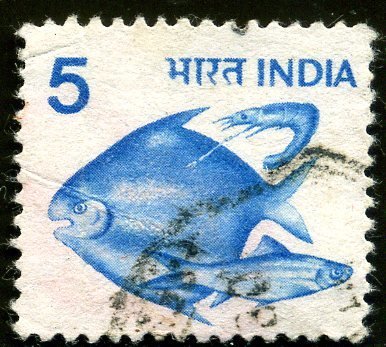
Rural Prosperity
Everyday systems of food and livelihood
Beginning in 1979, rural production moved to the foreground. Fish, poultry, irrigation, dairying, nutrition, fruit, cotton, handloom weaving, afforestation, and family welfare formed a linked picture of village work and public development.
- Launch motif: bumper harvest
- Livelihoods: fishing, dairying, poultry, weaving, rubber tapping
- Public themes: adult education, nutrition, irrigation, and family welfare
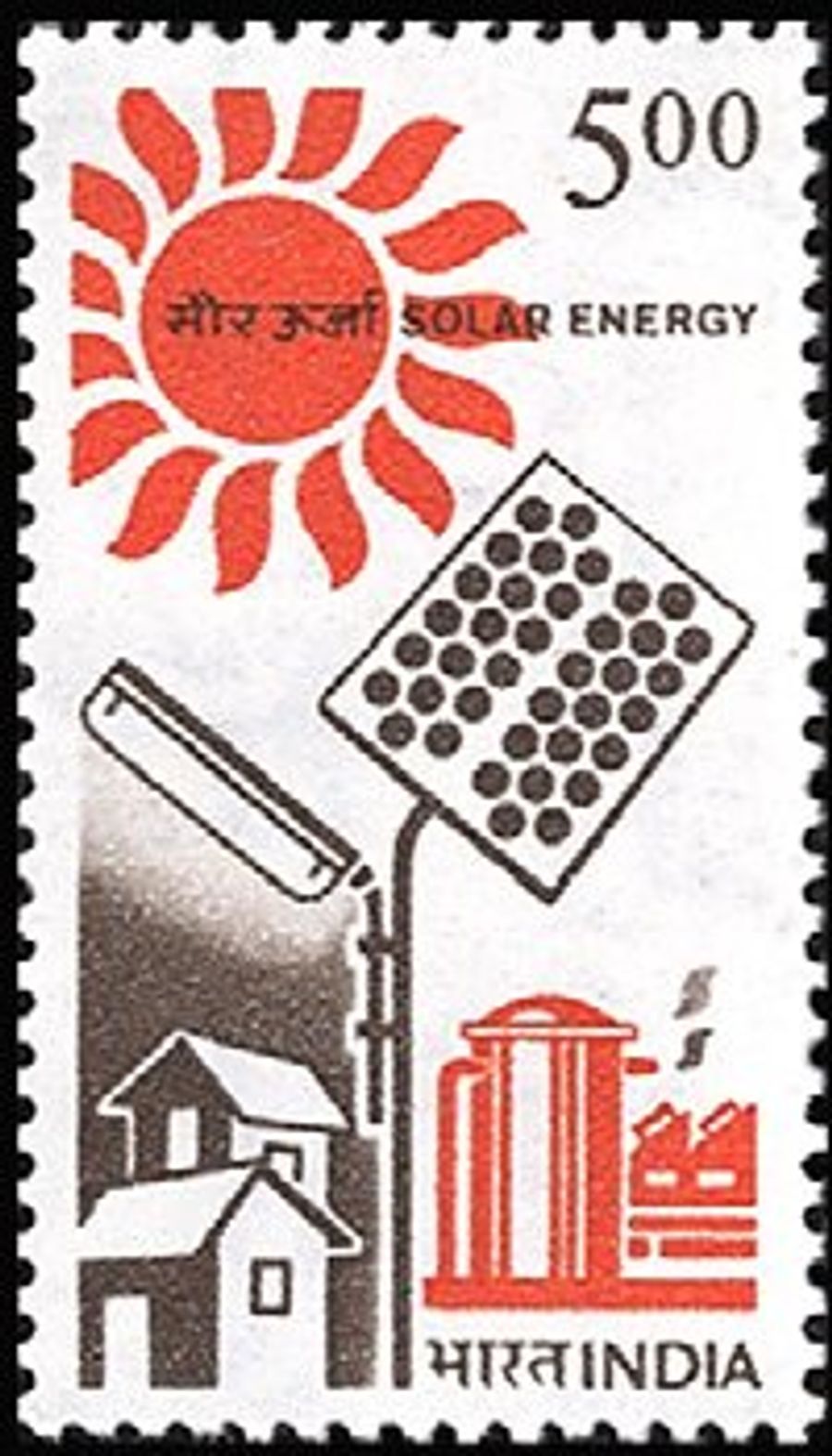
Family Planning, Energy Conservation & Technology
Modern systems on the envelope
Wind and solar power, biogas, television, family welfare, public health, and prominent national figures extended the developmental vocabulary into energy and communications. New issues appeared over several years rather than as a single launch set.
- First listed issue: wind energy, 1986
- Energy: wind, solar, and biogas
- Communication: television receiver and tower
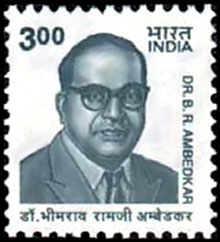
Special Definitives & Personality Series
Public causes and public figures
This collector grouping brings together special definitives for Sanchi, family welfare, oil conservation, communal harmony, and polio immunisation, followed by regularly used portraits including B. R. Ambedkar and Subhas Chandra Bose.
- Public causes: health, harmony, conservation, and heritage
- Personality issues: leaders used as extended-sale definitive designs
- Collector clue: catalogues may divide this era into 8A and 8B
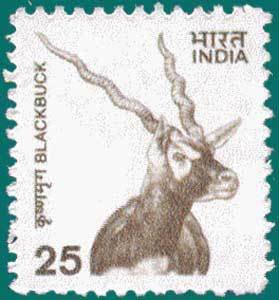
Natural Heritage of India
A field guide in postal form
Animals, birds, a butterfly, and flowering plants created one of the most coherent modern definitive sets. Blackbuck, Nilgiri tahr, sarus crane, otter, leopard cat, Sundarbans tiger, painted stork, and paradise flycatcher turned routine postage into a compact biodiversity survey.
- Fauna: mammals and birds from varied Indian habitats
- Flora: amaltas and rose
- Design strength: a clear shared natural-history identity across values
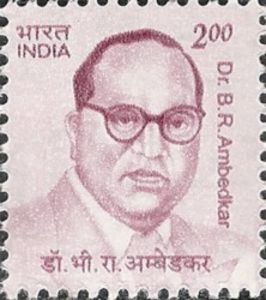
Builders of Modern India
Nation-builders across many fields
Portraits linked political leadership with science, cinema, aviation, enterprise, social service, and the arts. The range included Gandhi, Nehru, Ambedkar, Indira Gandhi, Rajiv Gandhi, Satyajit Ray, Homi Bhabha, J. R. D. Tata, Mother Teresa, C. V. Raman, and Rukmini Devi Arundale.
- Values: 25 paise to ₹50 in the official issue table
- Fields: public life, science, art, enterprise, and service
- Format: consistent portrait-led designs for easy everyday recognition
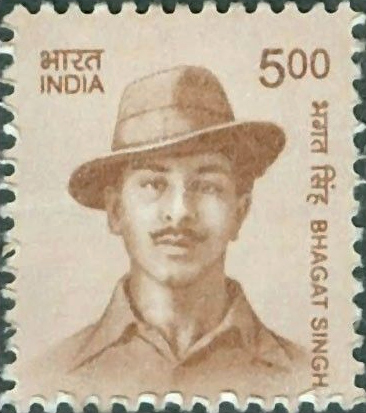
Makers of India
An expanded portrait album
The latest numbered series broadened the portrait approach with freedom fighters, reformers, political leaders, musicians, poets, scientists, and thinkers. Its subjects include Bhagat Singh, Vivekananda, Abul Kalam Azad, M. S. Subbulakshmi, Bismillah Khan, Ravi Shankar, Ramanujan, Subhas Chandra Bose, Sardar Patel, Atal Bihari Vajpayee, A. P. J. Abdul Kalam, and Rabindranath Tagore.
- Launch: 2015, with additions in following years
- Theme: individuals who shaped India’s public and cultural life
- Latest catalogued issue: Rabindranath Tagore, ₹50, 2020
A practical collecting plan
Start by series
Choose one design family, then arrange values in ascending denomination. This makes missing stamps and unexpected colour changes immediately visible.
Record the printing clues
Note watermark, perforation, paper, gum, printing method, inscription, and postmark. A familiar design can hide several catalogue varieties.
Sources & catalogue notes
- India Post definitive and special-definitive issue table — the principal source for issue dates, names, denominations, and categories.
- India Post philatelic exhibit — definition of a definitive stamp and the official total of eleven series.
- India Post current definitive and special-definitive listing — later Makers of India entries through Rabindranath Tagore in 2020.
- Indian Philatelics definitive series index — collector terminology for series 4–11 and their sub-series.
- Wikimedia Commons: Definitive stamps of India — image files and individual licence records.
This is an illustrated series history, not a valuation catalogue. Dates are first-issue or collector-group date ranges; later printings and postal use can extend beyond them.